Learn: Identity & Access — orientation
Who — or what — is allowed to do things on this platform, and how that stays auditable instead of sprawling into scattered permissions nobody can track. This is the human and machine side of least privilege with nothing standing, made concrete.
The question
Section titled “The question”A platform touches a lot of systems — AWS, Kubernetes, ArgoCD, Backstage, Grafana, GitHub, PagerDuty. Each has its own idea of “users” and “permissions.” Manage access in each system separately and you end up with an ex-employee still in three IAM accounts, a developer holding prod admin nobody remembers granting, and an audit that takes a week.
So: where does “who can do what” actually live, how does it reach a dozen different systems consistently, and how do you hand someone dangerous power without leaving it lying around? Answer that and you understand the platform’s access model — and why nobody here holds standing admin.
Decide once, derive everywhere, trust nothing permanently
Section titled “Decide once, derive everywhere, trust nothing permanently”The whole model fits in a sentence, and it’s the same declarative instinct as the rest of the platform:
Access is declared once, in git — as who you are and what you’re granted — and the platform derives and projects it into every system automatically. Dangerous power isn’t held; it’s borrowed, briefly.
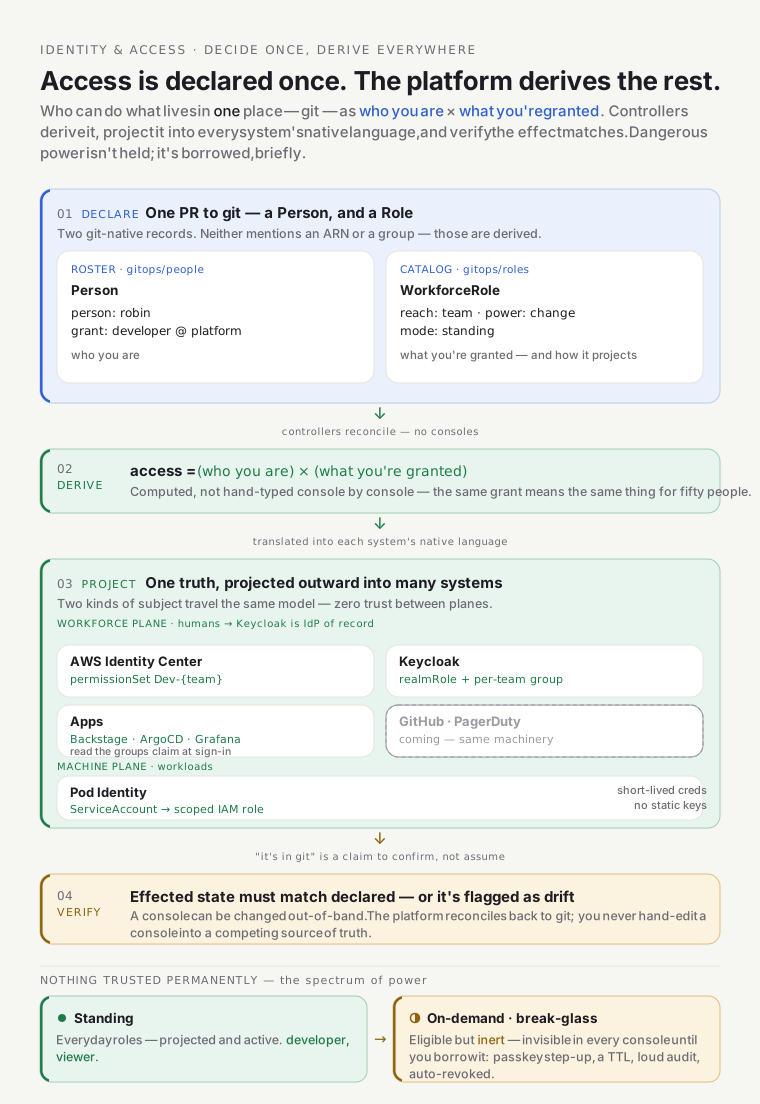
You don’t create a user in AWS, then again in Keycloak, then again in GitHub. You add a person to a git
registry with a grant, and controllers reconcile that into each system’s native config. Access is a
computed thing — (who you are) × (what you're granted) — projected outward, not hand-maintained in five
consoles.
That machinery earns its keep by killing the failure modes from the question:
- Offboarding stops being a checklist you hope was complete — delete the Person, and access vanishes from every projected system on the same PR. No ex-employee lingering in three IAM accounts.
- Audit stops being an archaeology dig — “who can touch prod, and how did they get it?” is a
gitquery, with the reviewing commit attached. No mystery admin nobody remembers granting. - Consistency is free — the same grant means the same thing for fifty people, because it’s computed, not hand-typed console by console.
None of those can happen by accident when access is a derived function of one declared source rather than fifty independent piles of clicks.
Think of it as one HR system wired to every building’s badge reader. You don’t walk to each door and cut a key; you update the directory once, and every lock re-keys itself — grant access and the badges appear everywhere, revoke it and they vanish everywhere, on the same day. Where the metaphor breaks: each target here (AWS, Keycloak, GitHub) has its own internal notion of permissions, so the platform doesn’t push one badge — it translates the grant into each system’s native language. That translation step is “project,” and it’s the crux.
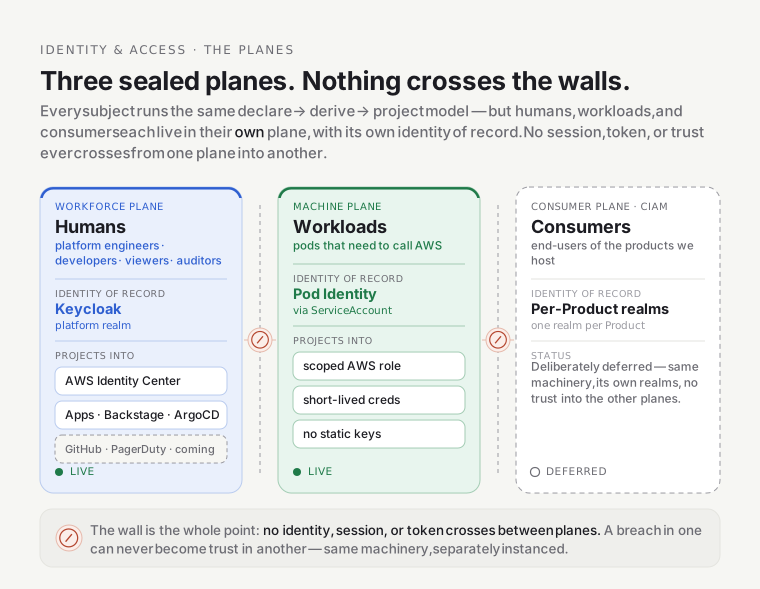
Two kinds of subject travel this model, and it’s worth separating them:
- Humans — the workforce plane: platform engineers, developers, viewers, auditors. Their identity of record is Keycloak, projected to AWS (Identity Center), the apps, and (coming) GitHub/PagerDuty.
- Workloads — the machine plane: pods that need to call AWS. Their identity is Pod Identity — scoped, short-lived, no static keys.
A third, consumer/CIAM plane — the end-users of products we host — is deliberately deferred, with its own isolated per-Product realms. Same machinery, zero trust between planes.
The source of truth — a roster and a catalog, in git
Section titled “The source of truth — a roster and a catalog, in git”Access starts as two kinds of git-native record. Here’s a real person from the roster
(gitops/people/robin-vega.yaml):
kind: Personspec: person: robin # the Keycloak anchor (a named user) grants: - { role: developer, team: platform } # standing — everyday access to the platform Team's productsThat’s the whole declaration: who they are (robin) and what they’re granted (the developer role,
scoped to the platform team). Nothing about AWS ARNs or Keycloak groups — those are derived.
The other half is the role catalog (gitops/roles/), where each WorkforceRole declares its shape and how
it projects. The developer role:
kind: WorkforceRolespec: reach: team # scope: their own team, nothing outside it power: change # can deploy + operate (not just view) mode: standing # everyday access, always active riskTier: standard identityCenter: { permissionSet: "Dev-{team}", sessionDuration: PT4H, … } # → AWS console access keycloak: { realmRole: developer, perTeamGroup: true } # → app accessThat separation is the point: a person file says nothing about how AWS or Keycloak work; a role file says nothing about who holds it. Onboard someone → add a Person with a grant. Change what “developer” can do → edit one role, and it re-derives for everyone who holds it. Offboard → delete the Person, and access vanishes from every projected system at once. One source, many projections.
One subtlety the model takes seriously: declaring access isn’t the same as effecting it. The grant in git is intent; the config rendered into each system is the effect — and a system could always be changed out-of-band (someone clicks a console). So the mature version of “decide once” is really decide → derive → project → verify: the platform checks that the effected state matches the declared one and flags drift. “It’s in git” is a claim to confirm, not assume — the same discipline the security model applies to every control.
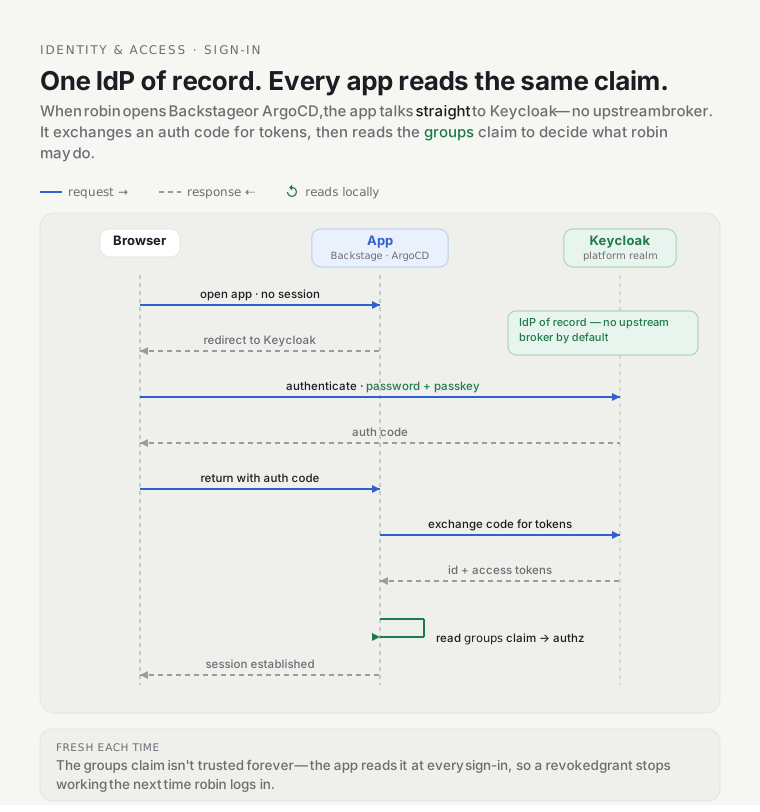
That projected Keycloak group isn’t just stored — an app reads it at every sign-in. Here’s the direct-Keycloak OIDC flow when robin opens an app like Backstage or ArgoCD — the app talks straight to Keycloak:
The machine side — workload identity without keys
Section titled “The machine side — workload identity without keys”Humans aren’t the only subjects. Your shop pod needs to read its S3 bucket, so it needs an identity too,
and the platform’s answer is the same no-standing-secret instinct. Through EKS Pod Identity, a pod assumes a
scoped AWS role via its ServiceAccount — the real one behind alpha’s shop:
Pod-alpha-shop-dev-storefront → arn:aws:iam::<workload-acct>:role/Pod-alpha-shop-dev-storefrontNo access key is ever minted, stored in the image, or left sitting in a secret to be stolen; the pod gets short-lived credentials at runtime, scoped to exactly what that service declared it needs (see the Environment API, which provisions these). Same principle as the human side — least privilege, nothing standing — for a different kind of subject. It’s the “visitor badge, not a copied master key” from the security model, made real.
Agents are a machine subject worth flagging on their own. An AI agent (like the triage copilot) gets its own least-privilege Pod Identity like any workload — but don’t mistake it for a plain one, because its authority is richer. An agent often acts on behalf of a human or the platform, so the model keeps three identities separate: the agent’s own workload identity, its tool/model grant, and the on-behalf-of-user delegation. The governing rule is sharp: effective authority is the intersection of the agent’s grant and the calling human’s scope — enforced by trusted code at the boundary, never by the agent itself — and delegation only ever attenuates (each hop can narrow, never escalate).
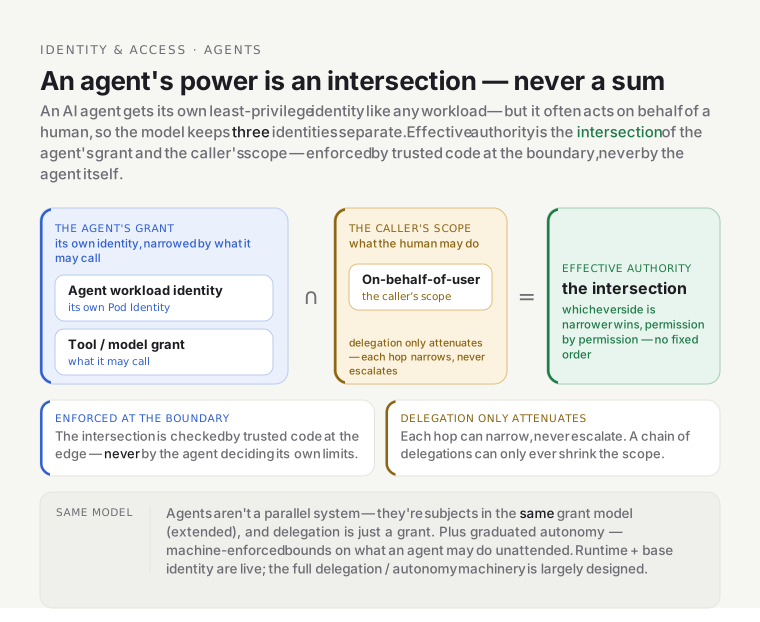
It’s not a parallel model: agents are subjects in the same grant model, and delegation is just a grant. That, plus graduated autonomy (machine-enforced bounds on what an agent may do unattended), is the Agentic platform’s subject — the runtime and the copilot’s base identity are live, the full delegation/autonomy machinery is largely designed. Flagged here so you don’t file an agent under “plain workload.”
Dangerous power you borrow, not hold
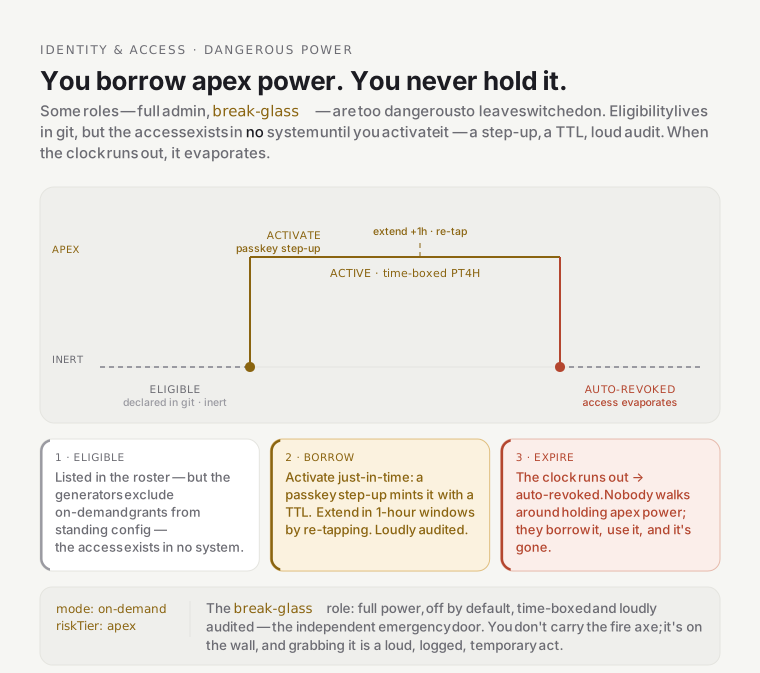
Section titled “Dangerous power you borrow, not hold”This is where the model earns its keep. Some roles are too dangerous to leave switched on: full admin, emergency break-glass. The platform’s answer is temporary power — you’re eligible, but the power is inert until you activate it, and it expires.
Look at the break-glass role — the emergency door:
kind: WorkforceRolespec: reach: platform power: manage-access mode: on-demand # ← NOT standing: off by default riskTier: apex description: Full power, off by default, time-boxed and loudly audited — the independent emergency door. # sessionDuration PT4H — extend in 1h windows (re-tap a passkey), then re-borrowThe mechanism: an on-demand grant in the roster declares who may borrow what — but the projection
generators deliberately exclude on-demand grants from the standing config. The eligibility exists in git,
but the access does not exist in any system until you activate it — a step-up (re-prompt a passkey), a
TTL, and loud audit.
When the clock runs out, it’s auto-revoked. Nobody walks around holding apex power; they borrow it, use it,
and it evaporates.
That’s the literal break-glass panel — behind glass, off by default, and breaking it sets off an alarm. You don’t carry the fire axe; it’s on the wall, and grabbing it is a loud, logged, temporary act.
So the spectrum runs from standing roles (everyday, projected and active) to on-demand roles (dangerous, eligible but inert, activated just-in-time and auto-expired). “Nothing trusted permanently” isn’t a slogan here; it’s the default state of your most powerful roles.
When it breaks — the ones you’ll actually hit
Section titled “When it breaks — the ones you’ll actually hit”- “I’m in the roster but I can’t do X.” Check whether your grant is standing or on-demand — an on-demand grant is eligible but inert until you activate it (step-up + TTL), and it’s invisible in every console until you do. That’s the design, not a bug.
- “Per-team
kubectlaccess isn’t working.” The v3 Composition emits the in-clusterdevelopersRoleBinding but not yet theDeveloperAccess-<team>IAM role + EKS access entry — that capability is designed, not built. Useplatctl kubeconfig/ PlatformAdmin meanwhile. It’s also why the live-verification for this module reads with PlatformAdmin. - “The console shows access git doesn’t.” That’s declared-vs-effected drift — the projection is derived from git, so the fix is to reconcile it (or investigate the out-of-band change), never to hand-edit the console into a competing source of truth.
For a developer
Section titled “For a developer”Your access is one line in your Person file — a grant of a role, scoped to your team. You get AWS console
and app access derived from it (per-team cluster access is landing — see the reference); you don’t request
permissions system-by-system. Need something more powerful (prod admin, break-glass)? You don’t get it
standing — you activate it just-in-time (a passkey step-up), use it, and it expires. To change anyone’s
access, it’s a PR to gitops/people — reviewed, audited, and projected everywhere on merge. No
console-clicking, no lingering permissions.
Go deeper
Section titled “Go deeper”- The full model + projection details: the Reference.
- The security framing: The Security Model (least privilege, zero standing trust); workloads in motion: The Life of a Deployment.
- Source of truth: Identity & Access Strategy (north star).